Agents spend on their own
A single workflow fans out into hundreds of model calls. Agents retry, loop, and escalate to bigger models, without any human approval from the FinOps team.
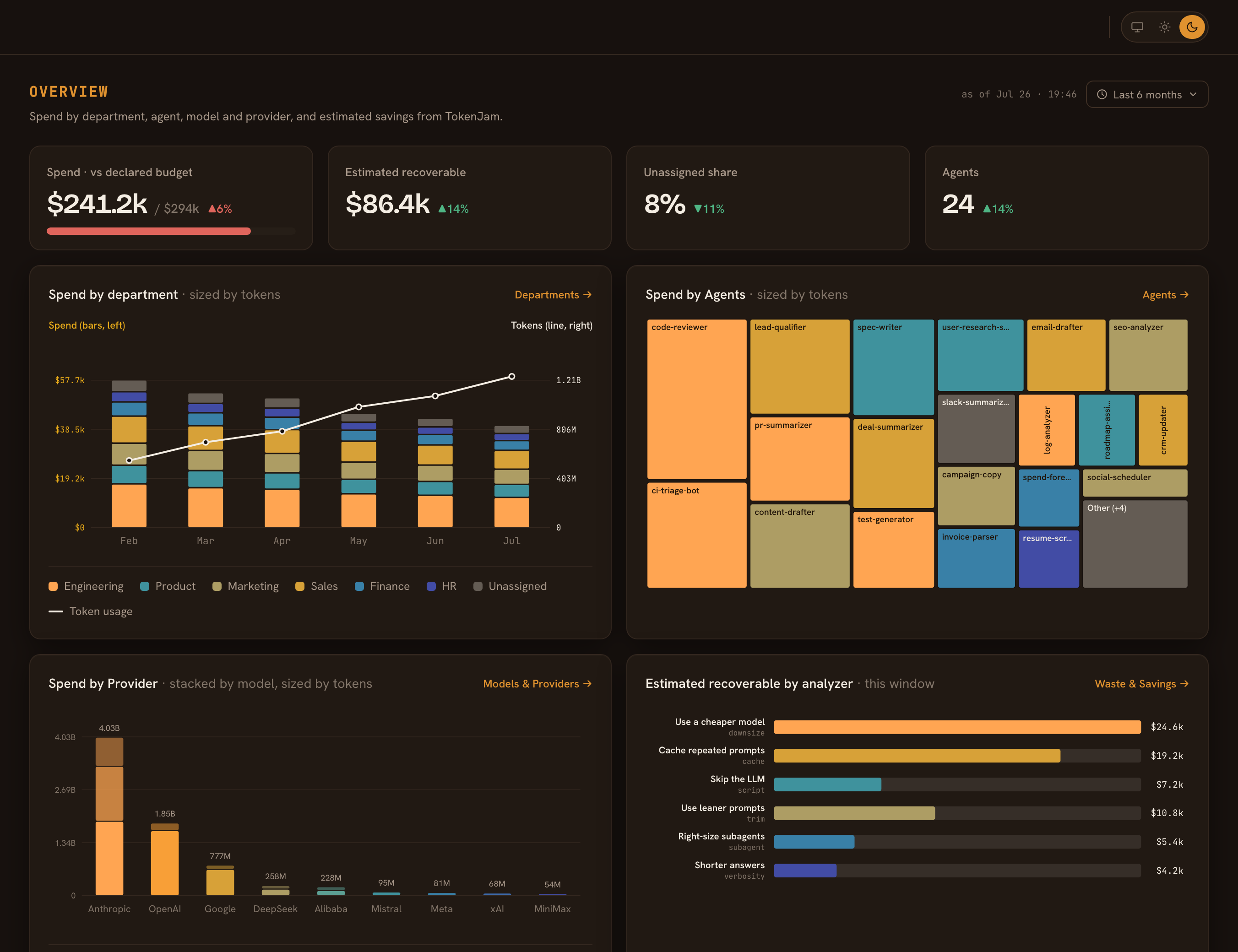
See every dollar your AI agents spend. Attribute it across the org from departments to agents and across providers, models and tools. Find wasted tokens, implement optimizations, enforce policies and govern them. All in one place.
30 mins, 3 months of free access.
Works with your agent stack
A single workflow fans out into hundreds of model calls. Agents retry, loop, and escalate to bigger models, without any human approval from the FinOps team.
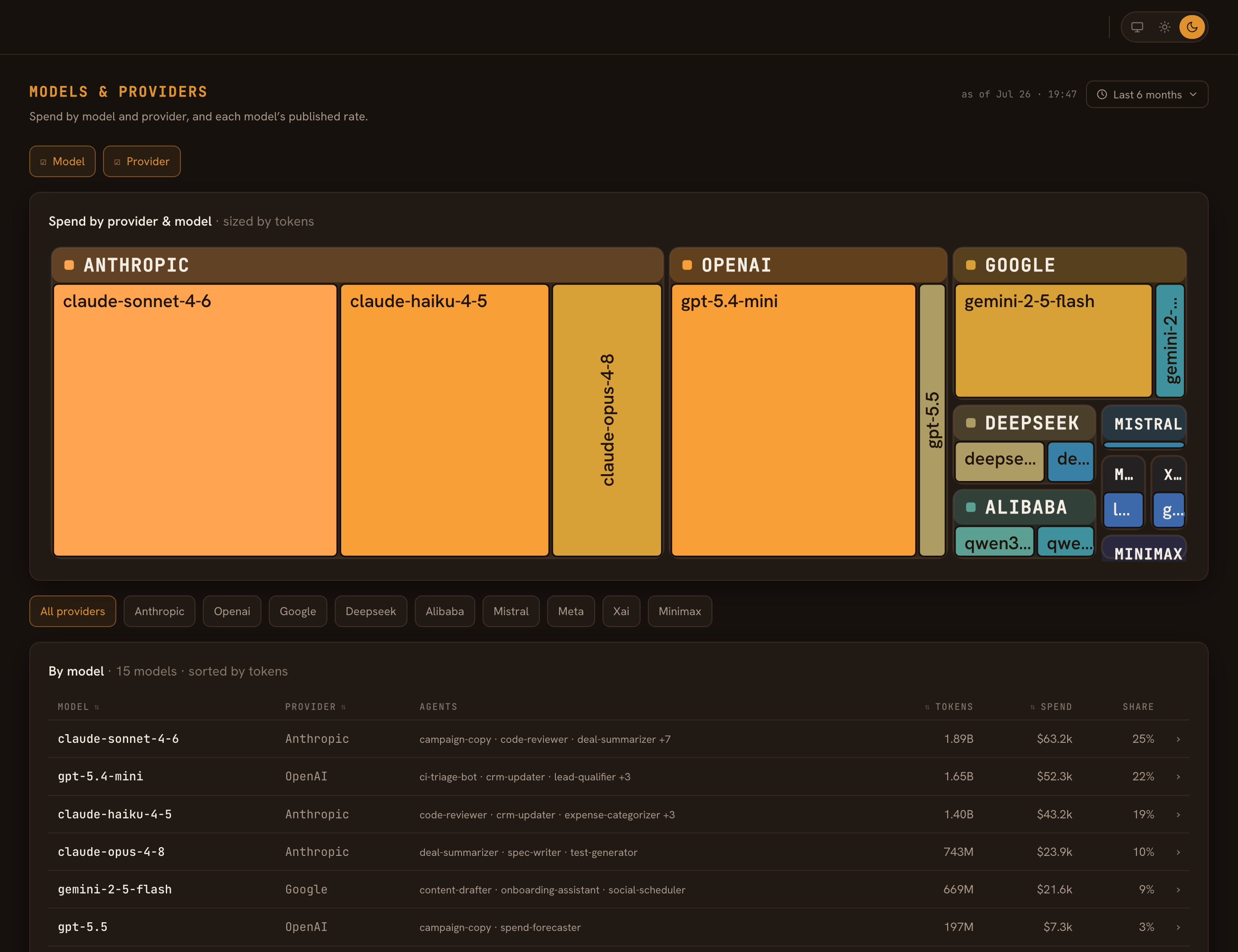
Anthropic, OpenAI, Google, AWS, and the rest each send their own invoice. There is no shared ledger, so no one owns the total.
There are a dozen ways to cut the bill: cheaper models, cached prefixes, leaner prompts, scripts. Knowing which to pull, where, and when is a full-time job no one has.
They reconcile provider bills after the close. They cannot see inside agent traffic, so waste never surfaces and spend is never weighed against the ROI it earns.
TokenJam is the missing spend governance layer for AI agent fleets.
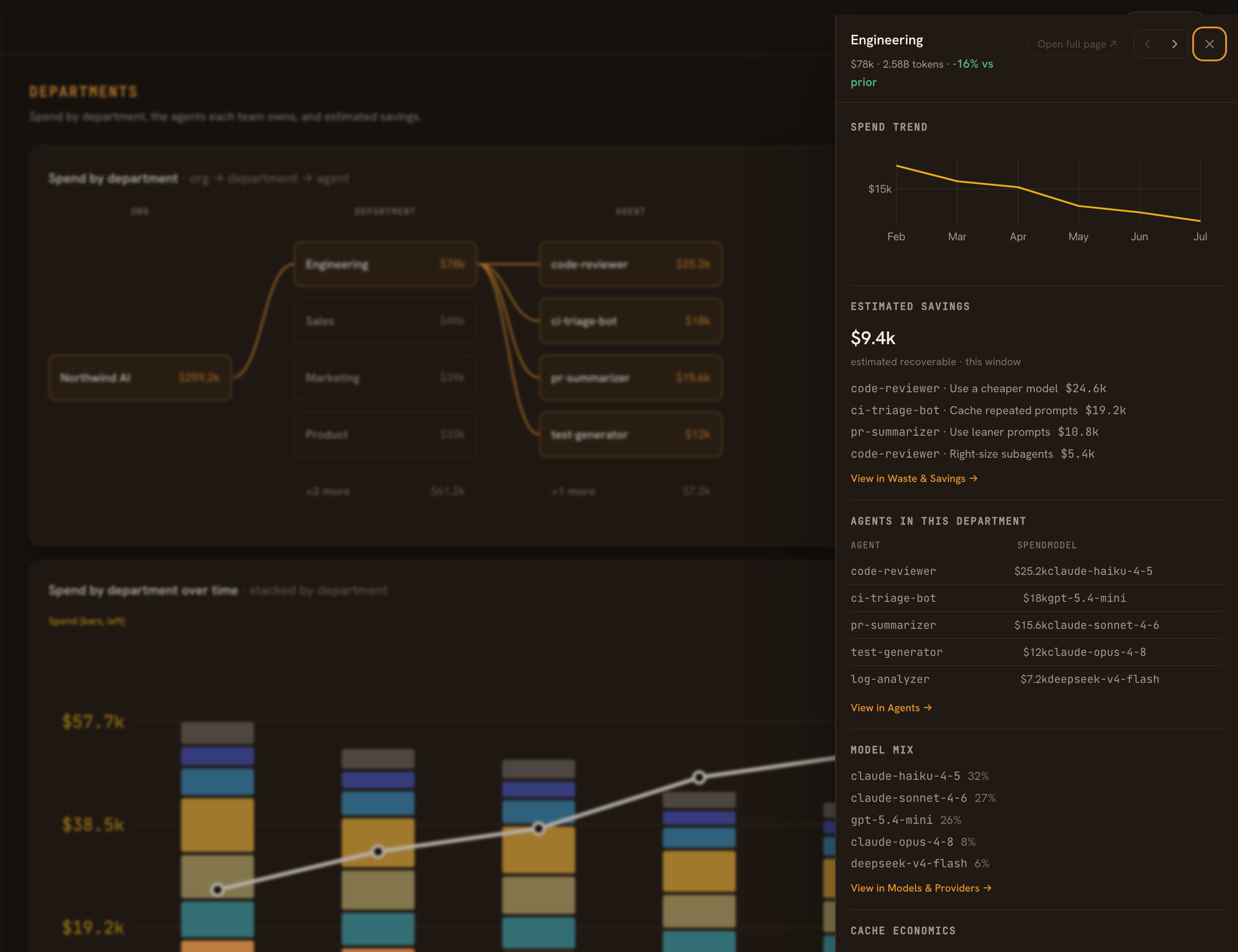
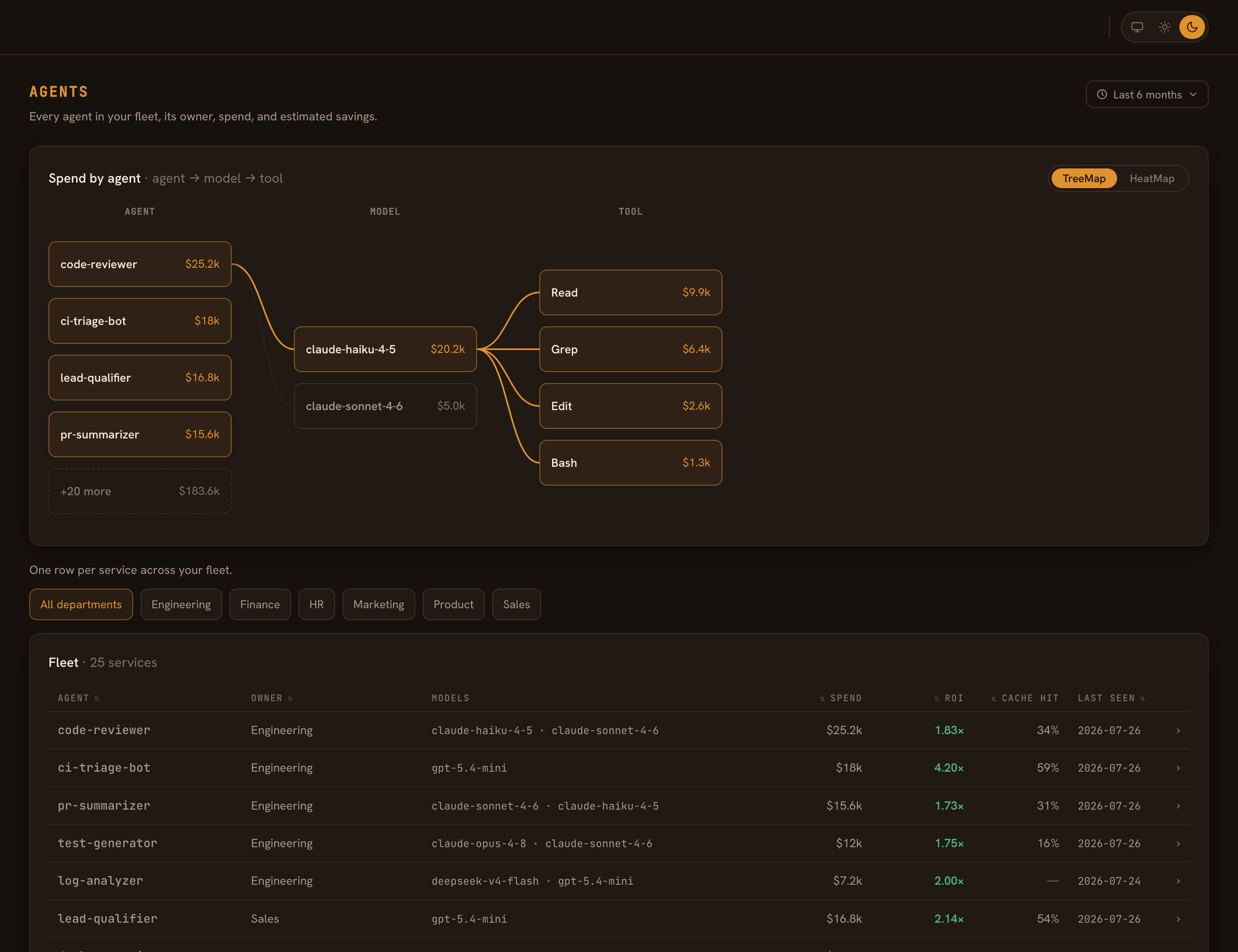
TokenJam prices every call as your agents make it and rolls it up the hierarchy your org already uses: org, department, agent, model. Finance gets a chargeback-ready number, and the drill-down behind it goes all the way to the request.
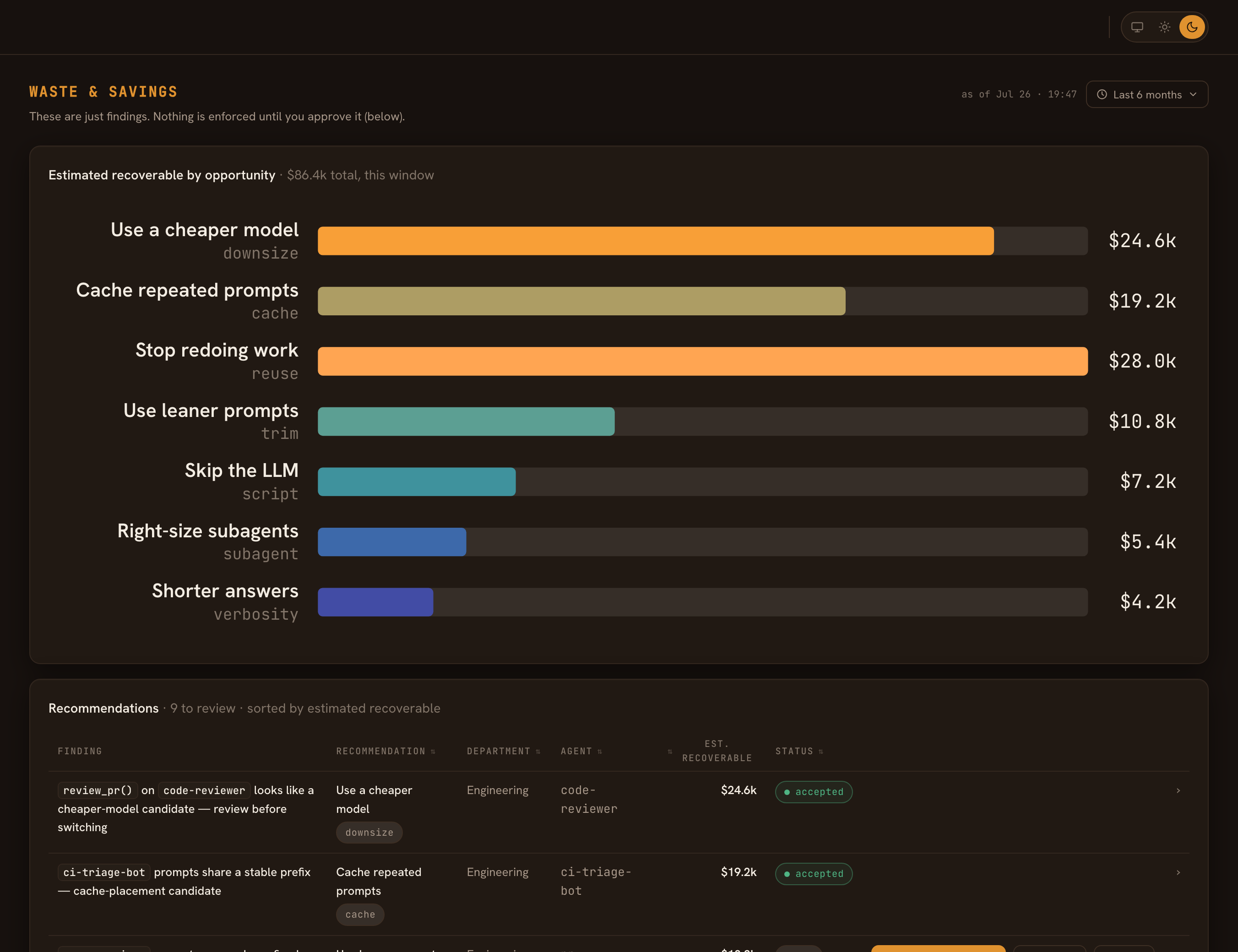
Analyzers run across the whole fleet and put a dollar figure on what's recoverable: cheaper routes, cacheable prefixes, prompts doing too much work, verbose outputs, and deterministic tasks better run as scripts. Every finding is a specific change, ranked by what it returns.
Every candidate fix (a cheaper model, a cached prefix, a leaner prompt, a right-sized subagent) runs against your real workload before it touches live traffic. TokenJam returns a verdict: holds or regresses. You enforce swaps that were checked in advance.
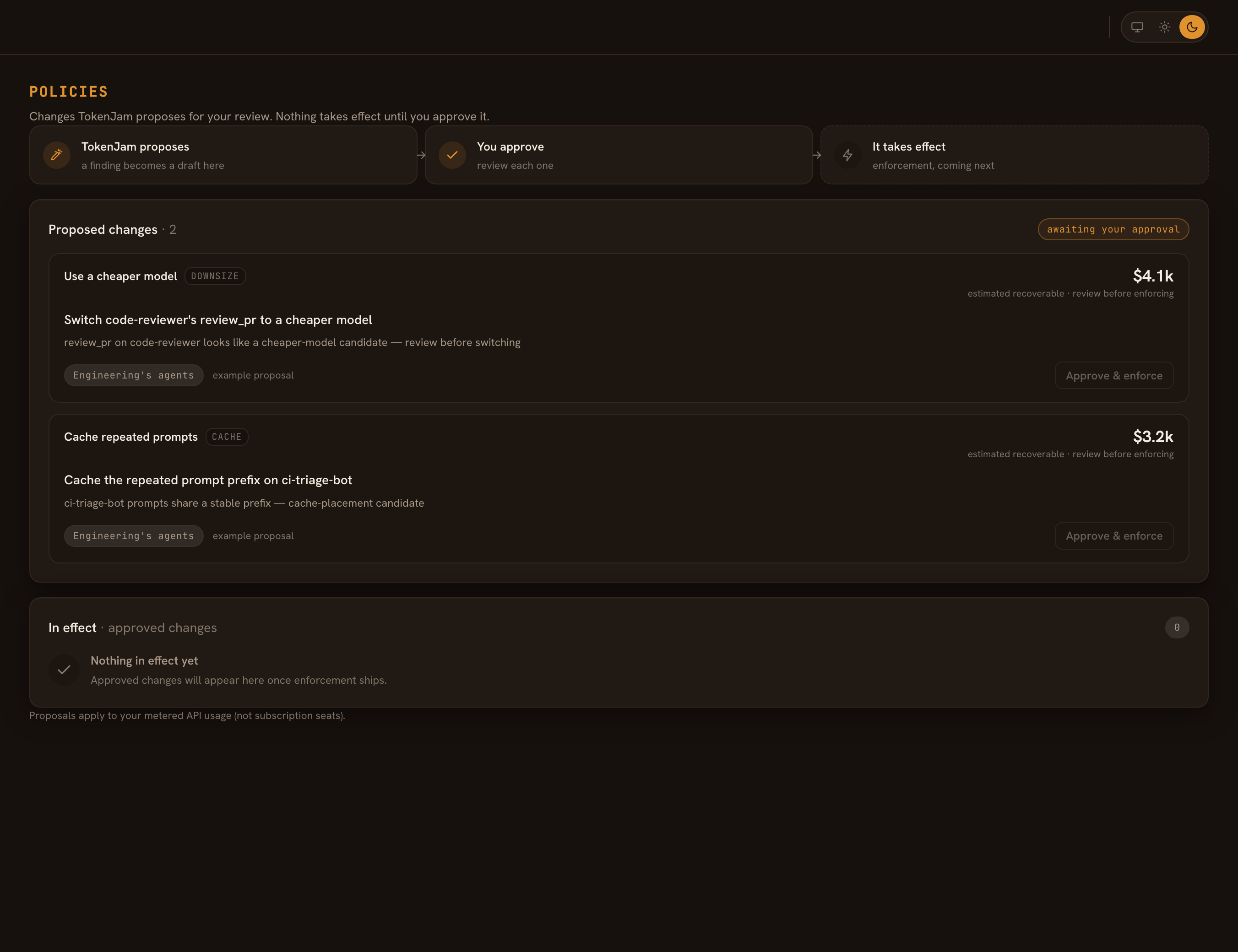
Once a change holds and your team approves it, TokenJam enforces it as policy with budgets and guardrails. Every decision lands in the audit trail, ready for an auditor.
TokenJam runs a continuous loop around your fleet: attribute every agent's spend, turn the waste into specific changes, validate each fix against your real workload, enforce the ones that hold, and prove the ROI of what's left. Every decision lands in an auditable trail.
Every agent and every call, priced as it happens and attributed org → department → agent → model — chargeback-ready.
Analyzers find the recoverable waste across the fleet, and each finding becomes a specific change: a cheaper route, a cached prefix, a trimmed prompt.
TokenJam validates that a candidate fix holds against your real workload before you enforce it — the certification engine at the heart of the loop.
Approved changes become policy and budgets on live traffic — every decision in an auditable trail.
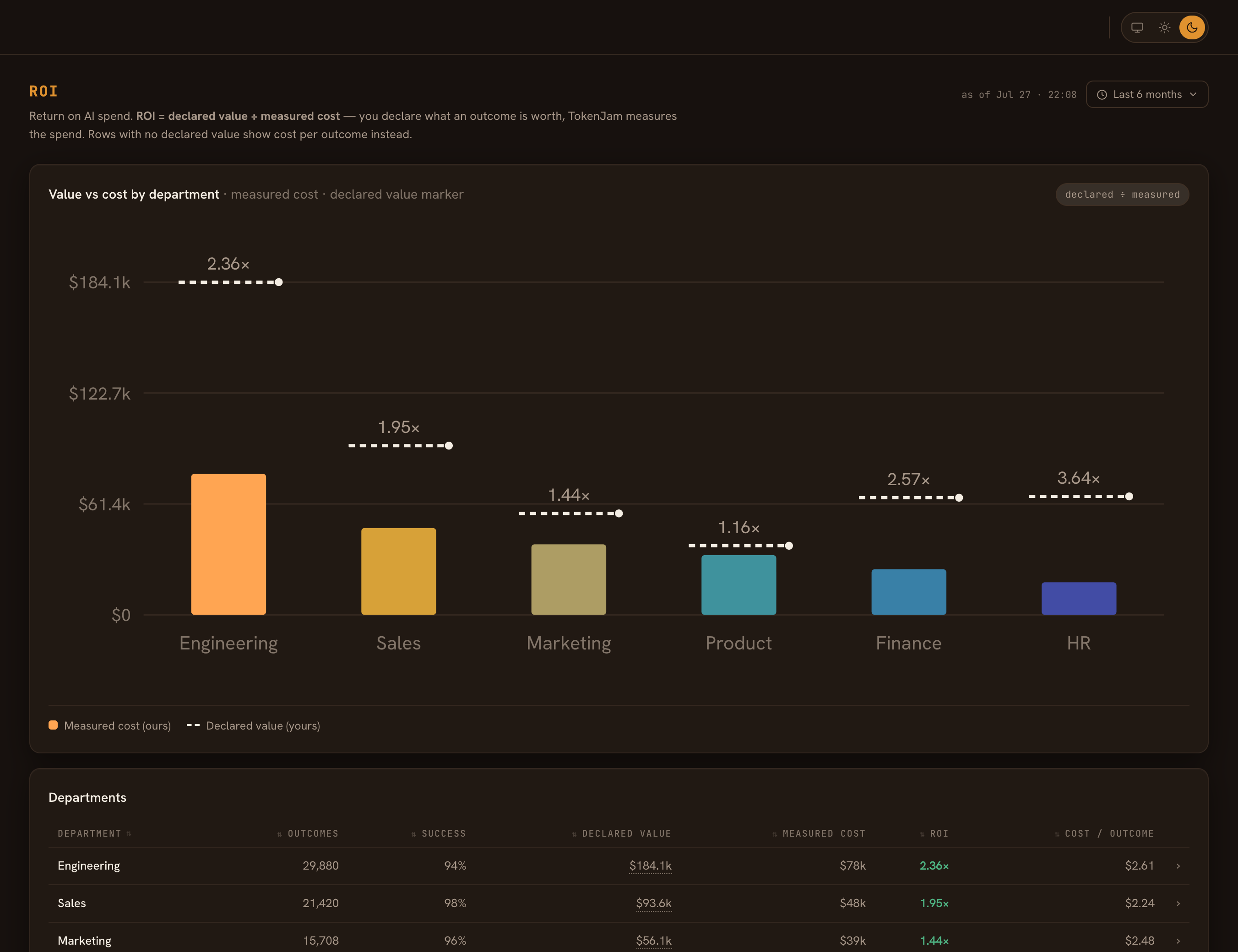
Tie the spend back to the value it produced: ROI as declared value ÷ measured cost, per customer and per department.
You declare what an outcome is worth: a closed ticket, a shipped PR, a served customer. TokenJam measures the spend behind it, priced per call, and puts the two side by side. ROI stops being a number typed into a slide.
AI-native startups and mid-to-large companies running agent fleets, working with us directly while the control plane takes shape around their needs.
Run on TokenJam Cloud free for three months after onboarding.
Partner fleets set the build order. What your org needs from the control plane lands first.
We stand the control plane up on your telemetry and walk your first findings with you.
For large and regulated orgs with data-residency and compliance needs: self-hosted and airgapped deployments run the same control plane in your own network. Your telemetry never leaves.
FinOps tools reconcile provider invoices after the month closes. TokenJam sits on the telemetry your agents emit, prices every call as it happens, and attributes it to the department, agent, and model that spent it. Then it surfaces the recoverable waste (cheaper models, cached prefixes, leaner prompts, deterministic scripts) and enforces the fixes your team approves. That is where waste gets found and fixed, not just reported.
Yes. Attribution is provider-agnostic: every call lands in the same org, department, agent, and model hierarchy regardless of who billed it. You get one ledger across all of your providers.
Only after a change is proven and approved. The change might be a cheaper model, a cached prefix, a leaner prompt, or a deterministic script that replaces an LLM call. It runs against your real workload first; once it holds and your team approves it, TokenJam applies it as policy. Every decision is recorded in the audit trail.
No. TokenJam is OpenTelemetry-native and ingests the telemetry your agents already emit, using standard gen_ai semantics. There is no proprietary SDK to add.
Then run it inside. The same control plane deploys self-hosted or fully airgapped in your own network. See TokenJam Enterprise for the deployment and compliance detail.
A 30-minute walkthrough on your own data: what your fleet spends, what's recoverable, and what enforcement looks like.